Establishing Roots with Support
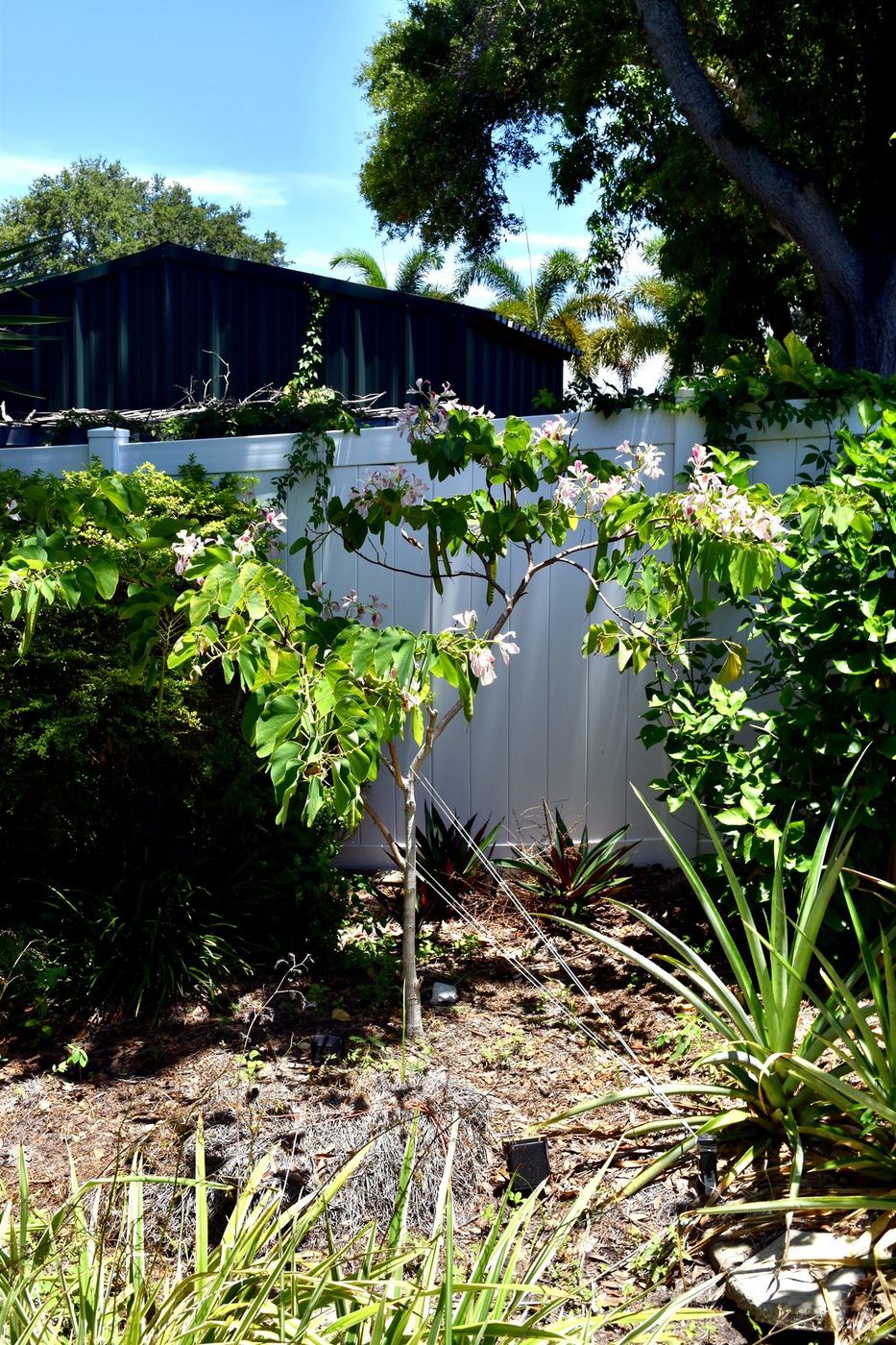
The storm came just as Claire was beginning to establish herself in her new home. High winds, the kind that Tampa Bay throws at you without warning, threatened to topple her. She was still vulnerable, still finding her footing in unfamiliar soil, still not strong enough to stand alone against the forces pushing against her.
So we tied her down.
We ran cords from her trunk to anchors buried deep in the ground, securing her upright, holding her steady while her roots grew deeper and stronger. It looked like restraint. But really, we were protecting her. We were saying: You're not ready to stand alone yet. Let us hold you until you are.
This is the part of the story we don't like to talk about. We want independence, self-sufficiency, the ability to weather any storm without needing anyone else.
But Claire needed those cords. And so do we.
"My grace is sufficient for you, for my power is made perfect in weakness." (2 Corinthians 12:9) Paul said this after begging God to remove his thorn, his struggle, his weakness. And God's answer wasn't to make him strong enough to handle it alone. It was to say: My grace is enough. My power works best when you're weak, when you're dependent, when you stop trying to be sufficient on your own.
This goes against everything our culture teaches us. But listen to what Scripture actually says: "Two are better than one, because they have a good return for their labor: If either of them falls down, one can help the other up." (Ecclesiastes 4:9–10) Not one is better. Two. Community. Interdependence.
And here's the radical part—we don't just receive support. We become the support for others.
"Let us consider how we may spur one another on toward love and good deeds, not giving up meeting together, as some are in the habit of doing, but encouraging one another." (Hebrews 10:24–25) We're called to be the cords for each other.
This is what Romans calls us to: "Let no debt remain outstanding, except the continuing debt to love one another, for whoever loves others has fulfilled the law… Love your neighbor as yourself." (Romans 13:8–10) When we see someone vulnerable, someone still establishing themselves—we don't judge them for needing help. We become the help. We tie the cords. We anchor them.
The beautiful part of Claire's story is that as her roots grew stronger over time, she needed those cords less and less. They weren't permanent. They were temporary support for a season of vulnerability.
"Rejoice in the Lord always. I will say it again: Rejoice! Let your gentleness be known to all. The Lord is near. Do not be anxious about anything, but in every situation, by prayer and petition, with thanksgiving, present your requests to God." (Philippians 4:4–6) There's no shame in presenting your needs.
"So do not fear, for I am with you; do not be dismayed, for I am your God. I will strengthen you and help you; I will uphold you with my righteous right hand." (Isaiah 41:10) God doesn't promise that you'll never need support. He promises that support will be there. Sometimes it comes directly from Him. Sometimes it comes through the people He places in your life—the cords He ties to hold you steady while you grow.
Maybe you're the one who needs the cords right now. There is no shame in this.
And maybe you're the one who can tie the cords for someone else. Don't wait for them to ask. Become the stability they need.
This is what it means to love your neighbor. This is what the body of Christ is supposed to be—a network of cords, holding each other up, stabilizing each other through seasons of vulnerability.
Claire's roots are growing stronger. One day, she may not need those cords anymore. But for now, she needs them. And we're honored to provide them.
And when you're established, when your roots run deep, when you're strong enough to stand alone—don't forget. Remember what it felt like to need the cords. And then tie them for someone else.