Shock and Loss
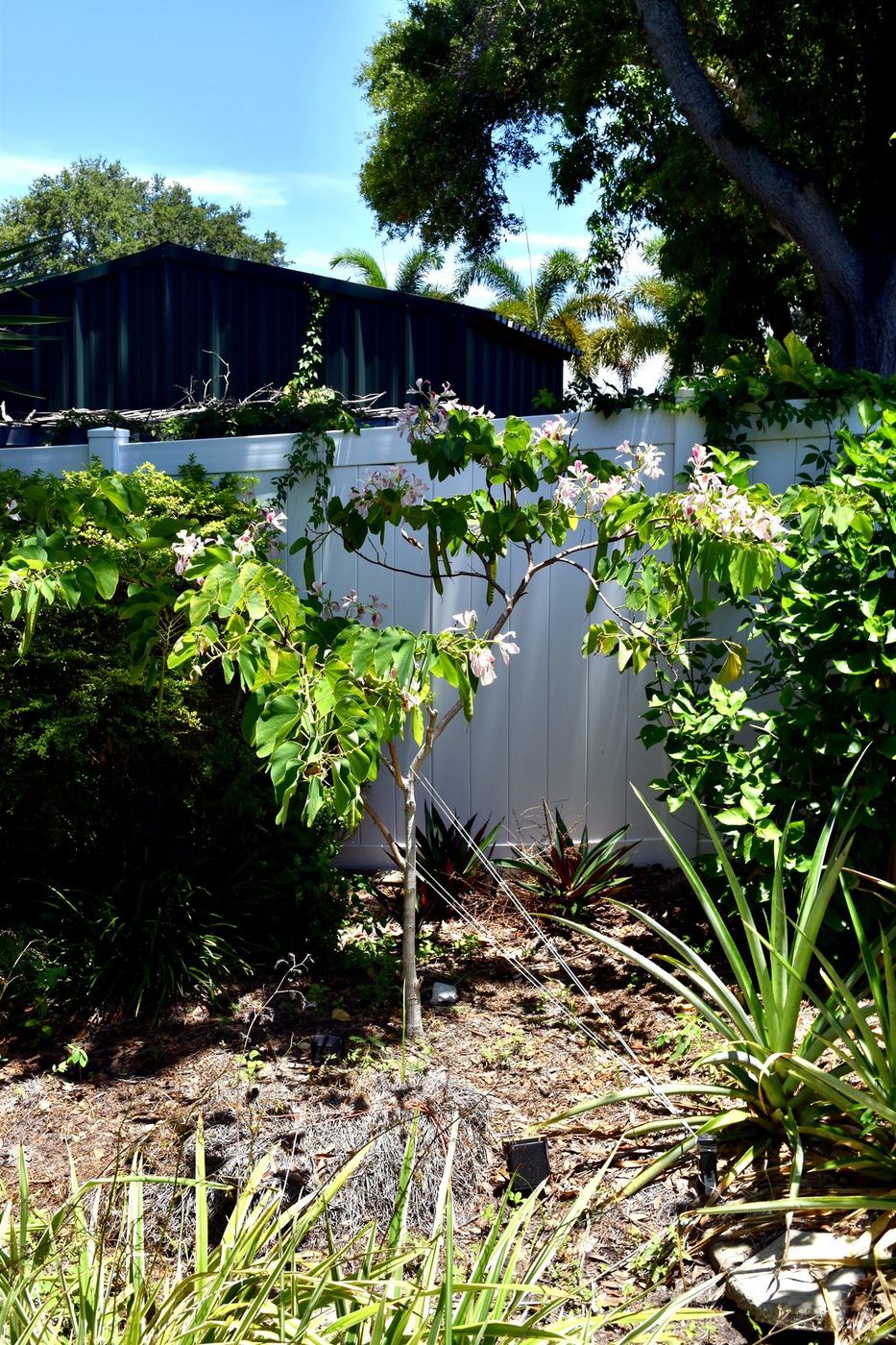
We did everything right. We researched. We planned carefully. We hired a professional gardener to ensure Claire's root ball stayed intact, that the trauma of uprooting would be minimized, that we were giving her the best possible chance at survival in her new location.
And then she shed every single leaf.
It happened gradually at first, then all at once. The vibrant green fronds that had flourished for eight months simply… dropped. Within weeks, Claire was nothing but bare branches and a wooden trunk. No leaves. No flowers. No sign of life. Just sticks reaching toward a sky that seemed to offer no promise of renewal.
We were devastated.
All that careful planning, all that professional care, all that love—and it felt like it had been for nothing. We'd uprooted her with the best intentions, and now she was dying. Or worse, she was dead, and we just hadn't accepted it yet. We stood in the yard looking at her skeletal frame and felt the weight of failure, of doubt, of a terrible mistake.
This is the season no one tells you about. The season after the hard decision, when you've done what you believed was right and everything looks like loss.
The psalmist knew this feeling. "Why, my soul, are you downcast? Why so disturbed within me? Put your hope in God, for I will yet praise him, my Savior and my God. My soul is downcast within me; therefore I will remember you." (Psalm 42:5–6) He's not pretending everything is fine. He's sitting in the despair and asking: Why do I feel this way? And then, barely, he turns back toward God. "I will yet praise him." Not because things are better. But because there is nothing else to hold onto.
There's a rawness in Psalm 88 that few people talk about. The psalmist cries out to God in darkness, and God doesn't answer. There's no resolution, no promise of light at the end. Just: "You have taken from me my closest friends and have made me repulsive to them. I am confined and cannot escape; my eyes grow weak with sorrow." (Psalm 88:8–9) Sometimes grief doesn't resolve neatly. Sometimes loss just sits there, heavy and real and unexplained.
But listen to what comes from the deepest places of loss: "Yet this I call to mind and therefore I have hope: Because of the Lord's great love we are not consumed, for his compassions never fail. They are new every morning; great is your faithfulness." (Lamentations 3:21–23) Even in Lamentations—a book written in the aftermath of exile and destruction—there is this turning point. Not because the loss goes away. But because, in the midst of loss, there is a recognition: God's compassion is real.
And to those in exile, to those who feel abandoned and lost, God says: "Though the mountains be shaken and the hills be removed, yet my unfailing love for you will not be shaken nor my covenant of peace be removed, says the Lord, who has compassion on you." (Isaiah 54:10) This is spoken to people who have been torn from their homes, displaced, broken. And God says: Yes, I stepped back. For a moment, you felt abandoned. But my compassion is deeper than your abandonment. My love will not be shaken. I haven't left you.
We didn't know that Claire's shedding of leaves was natural, necessary, a sign of dormancy rather than death. All we could see was loss.
"So do not fear, for I am with you; do not be dismayed, for I am your God. I will strengthen you and help you; I will uphold you with my righteous right hand." (Isaiah 41:10) This promise wasn't less true because Claire looked dead. God was present in the barrenness just as much as He would be present in the spring renewal. His presence doesn't depend on what we can see.
Maybe you're in the barren season right now. Maybe you made a hard choice, and now everything looks like loss. Maybe the leaves have all fallen and you can't see any promise of renewal.
This is the season where faith becomes real. Not the faith of certainty, but the faith of barely holding on. The faith that whispers: "I will yet praise him." The faith that remembers, even in darkness, that God's compassions are new every morning.
The barrenness is not the end of the story. It's the middle. And God is with you in the middle, even when everything looks dead.