Pruned to Flourish
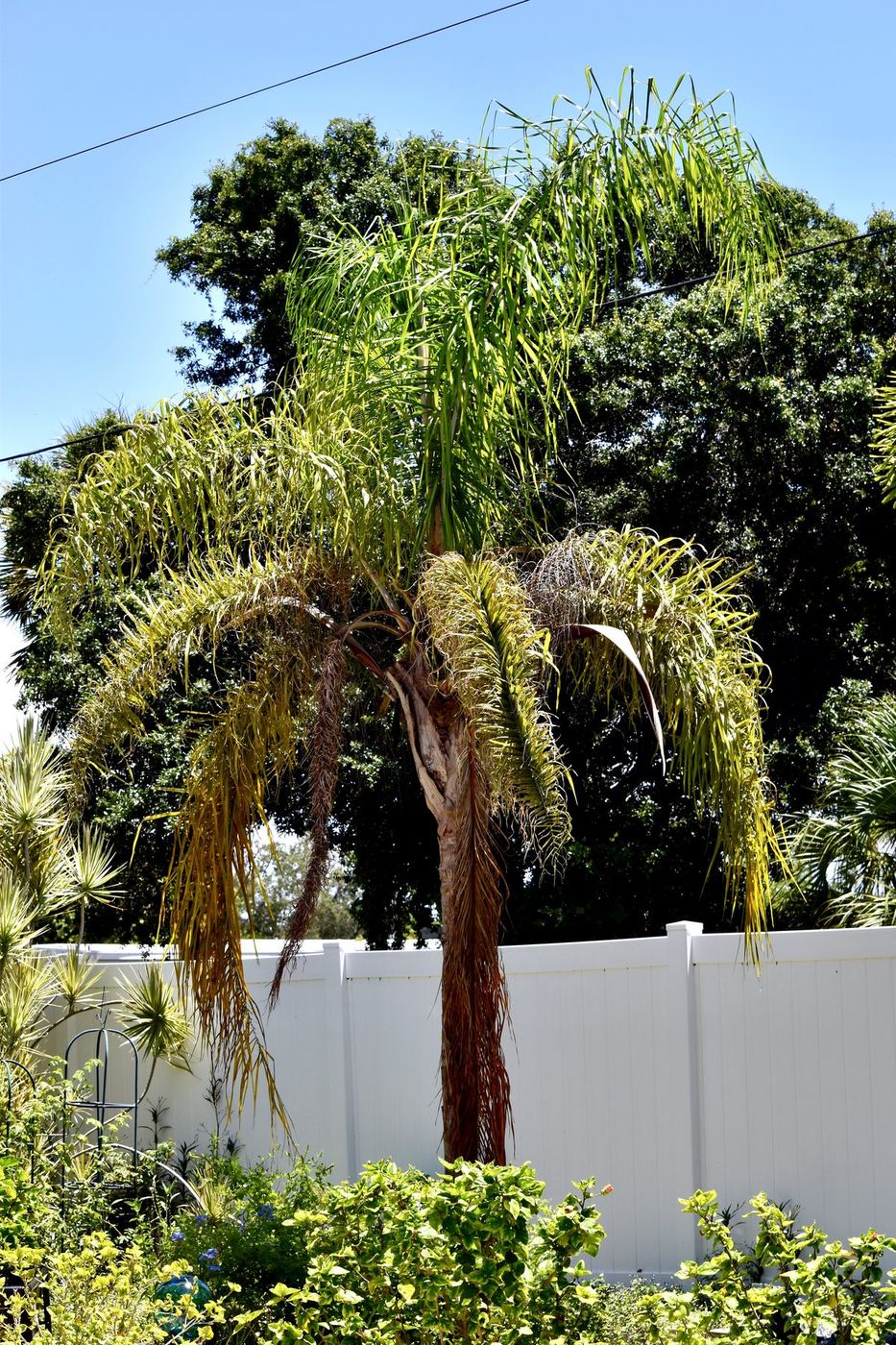
I know I'm weird. I name my plants. But when you name something, you pay attention to it differently. You notice when it's struggling. You care.
Coco is a queen palm, and when Patricia and I first moved into our home a few years ago, she was clearly in distress. Her fronds were dull, weak, sparse. She wasn't growing. She was just… existing, barely surviving, held back by something we couldn't quite see. We researched. We watered. We fertilized. We tried everything we could think of to help her heal.
Then Patricia discovered the real problem: Coco's outer bark and older fronds were restricting her growth. They were protecting her, in a way, but they were also suffocating her. The new life underneath was trying to break through, but it couldn't, not while the old, damaged parts still clung so tightly.
So we made a difficult choice. We stripped away that outer layer. We pruned back the fronds that were holding her back. It looked harsh. It felt wrong, like we were hurting her. But Patricia kept fertilizing, kept enriching the soil, kept tending to her even as we removed what was restricting her.
And then, after a year, everything changed.
New fronds emerged—richer, greener, bigger, stronger. They lasted longer. They grew with a vitality that the old fronds never had. Coco wasn't just surviving anymore. She was flourishing.
Jesus spoke to his disciples about this exact process. "I am the true vine, and my Father is the gardener. He cuts off every branch in me that bears no fruit, while every branch that does bear fruit he prunes so that it will be even more fruitful." (John 15:1–2) It sounds harsh when you first hear it. God, cutting away at you? Removing parts of you? But listen to what comes next: the pruning isn't punishment. It's the pathway to bearing more fruit, to becoming more fully alive.
We resist this. We hold tight to the old parts of ourselves—the patterns that feel safe, the identities we've built, the ways we've learned to survive. Even when they're suffocating us. Even when they're keeping us from the growth that's trying to break through.
"My son, do not despise the Lord's discipline, and do not resent his rebuke, because the Lord disciplines those he loves, as a father the son he delights in." (Proverbs 3:11–12) The pruning comes from love. Not cruelty. Not indifference. Love. The kind of love that says: I see what's restricting you. I see the new life trying to emerge. And I'm going to help you become what you were meant to be, even if it's painful.
But here's the thing: you can't be pruned and fertilized at the same time and expect to survive on your own strength. You need nourishment. You need care. You need to trust that while something is being taken away, something else is being given—grace, provision, the nutrients you need to endure the loss and emerge stronger.
"These have come so that your faith—of greater worth than gold, which perishes even though refined by fire—may be proved genuine and may result in praise, glory and honor when Jesus Christ is revealed." (1 Peter 1:6–7) The difficulties we face, the things stripped away, the losses we endure—they're not meaningless. They're refining us.
Coco didn't understand why we were cutting away her fronds. She couldn't see the new growth waiting underneath. She could only trust. And we tended to her with fertilizer, with water, with care, reminding her through our actions: You are worth this effort. You are worth the pain of change. We believe in the growth that's coming.
Maybe you're in the pruning season right now. Maybe something is being stripped away—a relationship, a job, an identity, a version of yourself you thought was essential. It feels wrong. It feels like loss. It feels like God is being cruel.
But He's not. He's being a gardener. He sees the new growth trying to break through. He's removing what's restricting you so you can flourish.
"Not only so, but we also glory in our sufferings, because we know that suffering produces perseverance; perseverance, character; and character, hope." (Romans 5:3–4) The pruning produces something. It's not wasted pain. It's transformation.
Coco is beautiful now. Her fronds are vibrant. She's growing. And every time I walk past her, I'm reminded: the things that seem like loss can lead to flourishing. The things that hurt can make us stronger. And the God who prunes us is the same God who fertilizes us, who tends us, who believes in our growth even when we can't yet see it.
Trust the gardener. Trust the process. The flourishing is coming.